
![[personal profile]](https://www.dreamwidth.org/img/silk/identity/user.png)


REGIONS ∞
Regions ∞
Anchors & the Fringes
Overview
The Diadem consists of stable regions known as anchors, which are surrounded by an unstable region known as the Fringes. These anchors are not affected by the same flux you'll find in the Fringes' diffusion zones. Each anchor city or town contributes to the planet's survival, such as industry, commerce, and (previously) agriculture.
Panorama is the main city. It's the only place with some semblance of road etiquette (people mostly stop at red lights). The Scrapyard is where all things auto-related are handled: parts, mechanics, and upgrades. A few smaller garages are in the city, but you can't get more than an oil change at those. Meanwhile, the nearby port city of Solaria has its own currency, customs, and unique atmosphere (it's run entirely by androids, or Synths, for one), but has become a popular destination due to its proximity, access to real ocean water (not the Yawning Sea).
You can also stop by the smaller towns of Acreage and Kolliery for a rest and refueling. Everything outside the anchors is called the Fringes. Here's where the diffusion zones, roads, and highways crisscross the Diadem. The mysterious Yawning Sea is considered a part of the Fringes.
Panorama is the main city. It's the only place with some semblance of road etiquette (people mostly stop at red lights). The Scrapyard is where all things auto-related are handled: parts, mechanics, and upgrades. A few smaller garages are in the city, but you can't get more than an oil change at those. Meanwhile, the nearby port city of Solaria has its own currency, customs, and unique atmosphere (it's run entirely by androids, or Synths, for one), but has become a popular destination due to its proximity, access to real ocean water (not the Yawning Sea).
You can also stop by the smaller towns of Acreage and Kolliery for a rest and refueling. Everything outside the anchors is called the Fringes. Here's where the diffusion zones, roads, and highways crisscross the Diadem. The mysterious Yawning Sea is considered a part of the Fringes.
Players can create and manipulate generic NPCs in their threads, including junkers, runners, storm chasers, and Synths. Read their descriptions here.
∞ Quick Links ∞
Panorama
The Capital
Population: 1 mil+
Climate: Cool/wet, mild seasons
Consul: Ros Che
Time Zone: -1:00 behind Kolliery; +1:00 ahead of Acreage
Climate: Cool/wet, mild seasons
Consul: Ros Che
Time Zone: -1:00 behind Kolliery; +1:00 ahead of Acreage
The largest of the anchors, Panorama is where the economy thrives. Its massive power plants are visible from a distance. Some live on the streets or sleep in their cars, while others occupy motels and apartments. Vending machines are scattered throughout. Shop signs, books, CDs, branding, etc. can be found in many languages, including ones you've never seen. Food spans the international range and beyond.
The city is divided into two major sections: the poorer South District consists of the Pavilion and the Blocks, while the middle-to-upper-class Sanctum occupies the northern end. Follow a road two hours southwest to reach the Scrapyard. The Map is linked above.
Enforcers patrol the streets. In the Pavilion, their job is to keep Panorama running. If you blatantly steal from a respected shopkeeper, you'll be arrested. If you start a fight with a drunk, no one cares. Wanton murder is bad for business, but they'll overlook the occasional insignificant death. In the Sanctum, things are more tightly restricted. Unruly behavior like drunken brawling will more likely lead to an arrest. Local jails will hold troublemakers for 2-3 weeks at most. See Crime & Punishment.
Panorama is the size of a major North American city. Its road infrastructure is based on the same. You'll need your car to get around. Your average commute is thirty minutes to an hour. No public transport. Taxis are available in the Sanctum, but the cost might not be worth it. General signage and traffic lights are intact. Enforcers don't care about laws or speed limits, but if you cut off the wrong person, you might get shot. Luckily, it's not as crowded as a big city ought to be, so you won't be fighting too many people on the road. Keep your wits about you, and you'll be fine.
The city is divided into two major sections: the poorer South District consists of the Pavilion and the Blocks, while the middle-to-upper-class Sanctum occupies the northern end. Follow a road two hours southwest to reach the Scrapyard. The Map is linked above.
Enforcers patrol the streets. In the Pavilion, their job is to keep Panorama running. If you blatantly steal from a respected shopkeeper, you'll be arrested. If you start a fight with a drunk, no one cares. Wanton murder is bad for business, but they'll overlook the occasional insignificant death. In the Sanctum, things are more tightly restricted. Unruly behavior like drunken brawling will more likely lead to an arrest. Local jails will hold troublemakers for 2-3 weeks at most. See Crime & Punishment.
Panorama is the size of a major North American city. Its road infrastructure is based on the same. You'll need your car to get around. Your average commute is thirty minutes to an hour. No public transport. Taxis are available in the Sanctum, but the cost might not be worth it. General signage and traffic lights are intact. Enforcers don't care about laws or speed limits, but if you cut off the wrong person, you might get shot. Luckily, it's not as crowded as a big city ought to be, so you won't be fighting too many people on the road. Keep your wits about you, and you'll be fine.
South District
The Pavilion
The Pavilion occupies the southwestern third of Panorama. It's got gas pumps, corner stores, street food, bars, laundromats, weapons—the usual. Some natural greenery can be found, particularly at the edges of the city, but it's nothing to write home about. Any meagre city parks and playgrounds are overgrown with minimal efforts at upkeep. Streets and alleys are grungy with the smells and grime associated with neglect. Not everything is natively produced or manufactured. Some items, especially recognizably branded items, have been looted from within the diffusion zones.
The "black market" is all around if you know where to look. Rather than a single concentrated area, it's backroom deals, meetings in someone's house, or a street corner. Gambling dens can be dangerous, but are good places to network and gain valuable connections. They're usually run by a loan shark.
The Pavilion's most important feature is the Dome, where anyone can sign up for nightly fights, and the LuxFilms theater, where you can watch a limited selection of eclectic films. Beyond these two unique locations, you can find shops selling retro electronics, low-skilled mechanics called Swappies who'll change a tire or your oil, and a sprawling street market with plenty of outdoor tables selling knick-knacks, snake oil, baked goods, and whatever you can find.
And, of course, every street corner and den has a dealer for whatever's your poison. Drugs aren't illegal, since technically nothing is, but territorial disputes do happen. Most Runners won't be too blatant about what they're doing.


The "black market" is all around if you know where to look. Rather than a single concentrated area, it's backroom deals, meetings in someone's house, or a street corner. Gambling dens can be dangerous, but are good places to network and gain valuable connections. They're usually run by a loan shark.
The Pavilion's most important feature is the Dome, where anyone can sign up for nightly fights, and the LuxFilms theater, where you can watch a limited selection of eclectic films. Beyond these two unique locations, you can find shops selling retro electronics, low-skilled mechanics called Swappies who'll change a tire or your oil, and a sprawling street market with plenty of outdoor tables selling knick-knacks, snake oil, baked goods, and whatever you can find.
And, of course, every street corner and den has a dealer for whatever's your poison. Drugs aren't illegal, since technically nothing is, but territorial disputes do happen. Most Runners won't be too blatant about what they're doing.
The Blocks
The Blocks occupies the southeastern third of Panorama. It passes for the "residential" area of the city, and consists primarily of hotels and motels. Those who're slightly better off might stay at Eden Heights, a series of apartment blocks that have fewer roaches and leaky ceilings. It also has a hospital and the only prison.
Your landlord is a faceless conglomerate. Managers are hired to look after the building and collect your rent. Folks in the Diadem come and go—disappearances and death are common, and new arrivals are frequent—so there isn't much emphasis on permanent housing. You can put your stays on a running tab, but don't take advantage. If you don't need a room but have stuff you want to keep safe, you can rent storage lockers or units in the Blocks. They're located sporadically between the motels and hotels. While many occupy their rooms more permanently, others move from hotel to hotel and room to room, since it's not uncommon for some to spend days on the road before returning. You can choose to do one or the other, too.
In addition to the lodgings available, you can find bars and shops nearby, within driving or walking distance. Due to the convenience, prices are slightly higher. Some hotels also have bars or clubs attached to them, and nearby gas stations have corner stores selling sandwiches, cheap coffee, and frozen food.
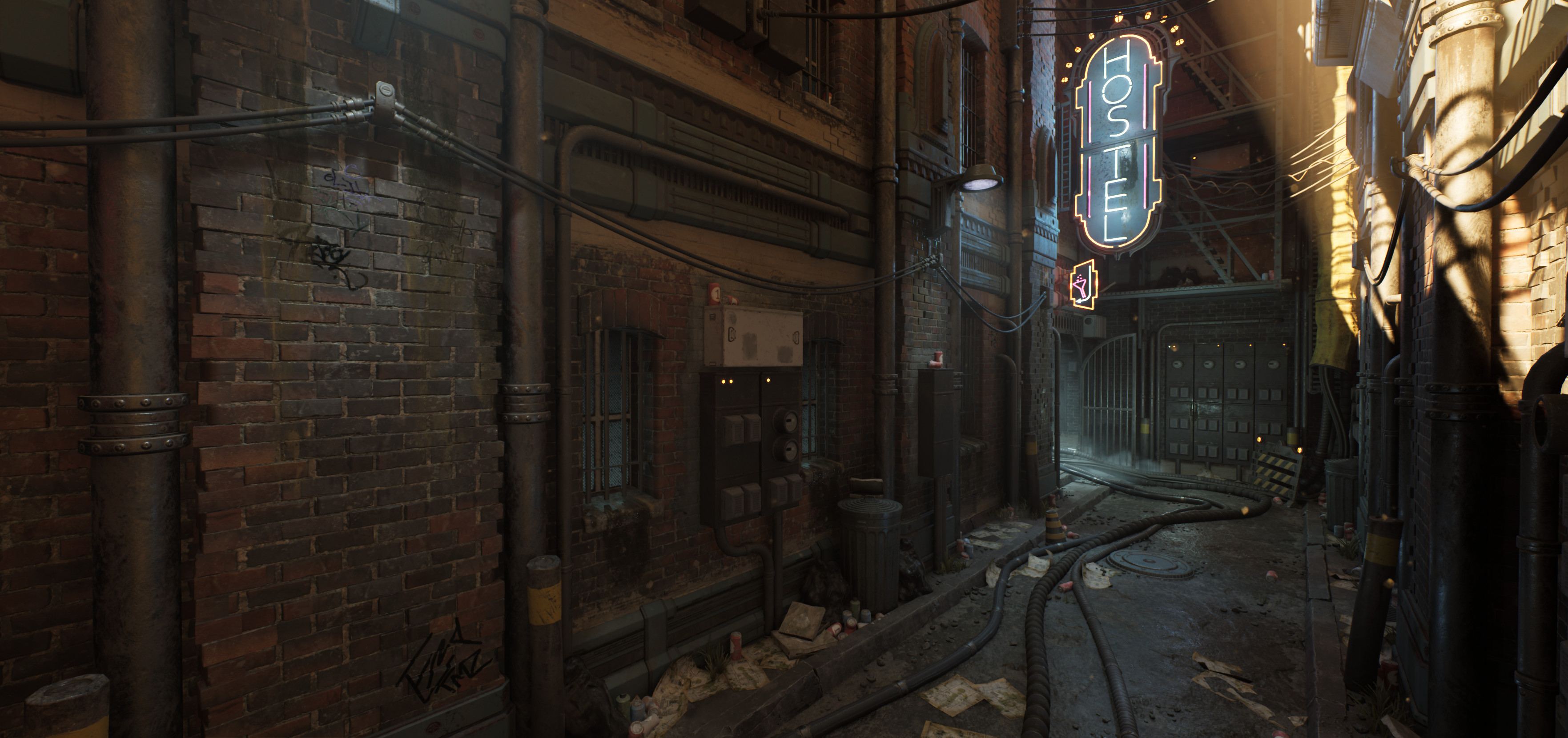
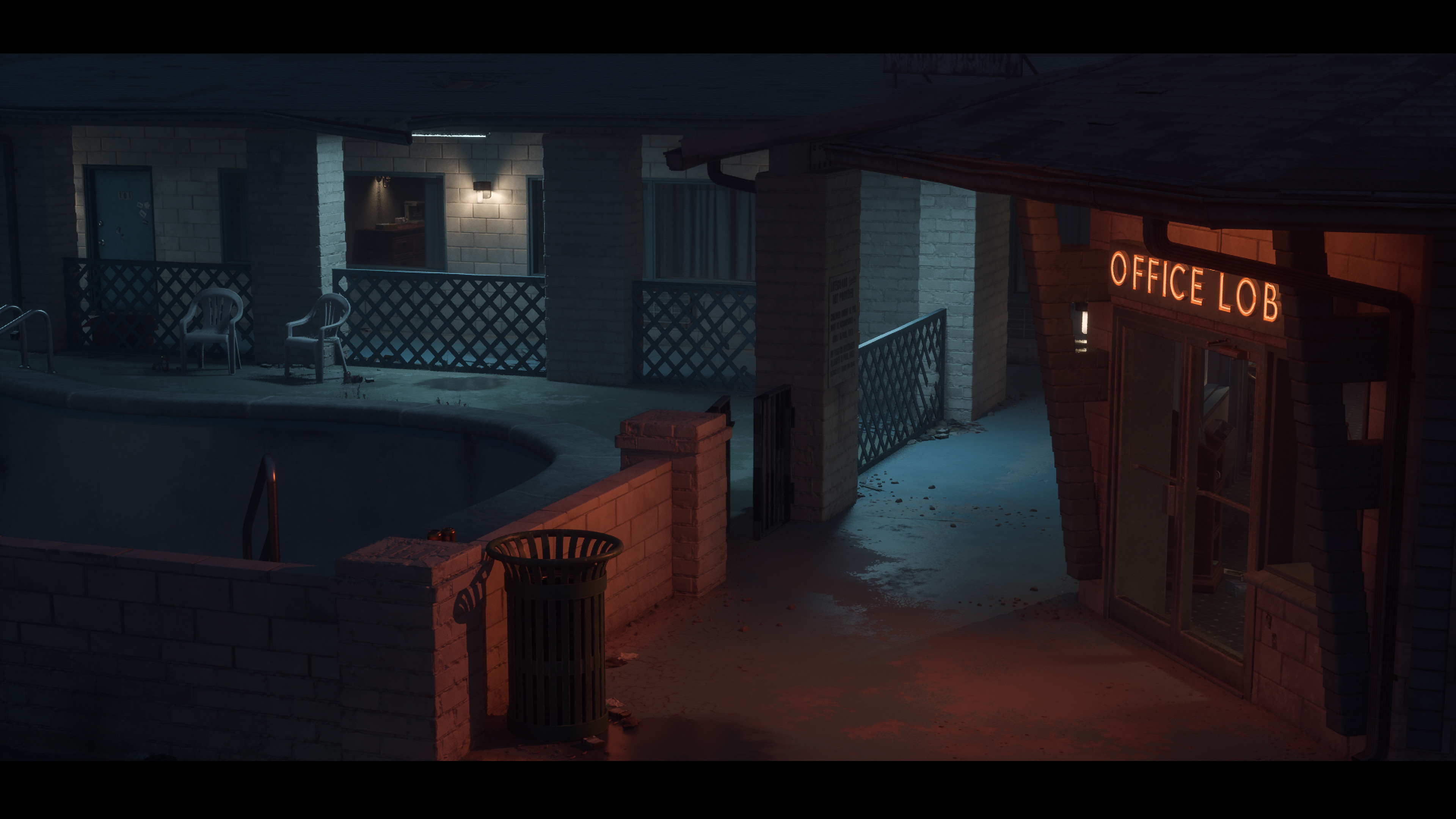
Your landlord is a faceless conglomerate. Managers are hired to look after the building and collect your rent. Folks in the Diadem come and go—disappearances and death are common, and new arrivals are frequent—so there isn't much emphasis on permanent housing. You can put your stays on a running tab, but don't take advantage. If you don't need a room but have stuff you want to keep safe, you can rent storage lockers or units in the Blocks. They're located sporadically between the motels and hotels. While many occupy their rooms more permanently, others move from hotel to hotel and room to room, since it's not uncommon for some to spend days on the road before returning. You can choose to do one or the other, too.
In addition to the lodgings available, you can find bars and shops nearby, within driving or walking distance. Due to the convenience, prices are slightly higher. Some hotels also have bars or clubs attached to them, and nearby gas stations have corner stores selling sandwiches, cheap coffee, and frozen food.
The Sanctum
An once-gated wealthy community, The Sanctum is now open. Enforcers will occasionally do a stop and search if they spot someone who might be suspicious, but otherwise, Panorama residents are free to come and go. Some places are still heavily guarded, like the power plants and the Consul's home. The rest of the district is accessible, including nicer condos you can move into once you've made decent headway paying off your loans.
Though the Blackout Riots of 126 did a number on the buildings and streets, the Sanctum's upscale infrastructure remains apparent: pipes don't burst every month, buildings are less prone to collapsing despite the damage, and shops have cleaner aisles. Grocery stores boast fresher produce, while restaurants have more consistent quality menus. There are fewer rats and roaches, and more effort is put into beautifying public spaces with flowers, bushes, and trees. Traffic is calmer, and there's a modest taxi service with reliable drivers you can flag down.
Overall, the Sanctum resembles what those living in a standard modern city might expect: crimes and vandalism may still occur, but it's not a constant occurrence on your doorstep like it is in the Blocks and the Pavilion. Fashion in the Sanctum varies just as much as it does elsewhere, with a trend toward business clothes with delicate and softer fabrics rather than the hardier, functional clothes preferred by residents of the Pavilion. It would appear that much of the fabrics and textiles shipped out of Acreage wind up here.
The Sanctum boasts two downsides: cameras are everywhere and weapons aren't openly carried the way they are in the Pavilion (keep your gun concealed, please; it's only polite). The entire district is kept under constant surveillance, Enforcers are stricter about crimes (you have a higher chance of being tossed in jail here), and some stores or services may turn away individuals they deem "suspicious-looking." If you're not much of a troublemaker, you'll have a decent time living in the Sanctum. If you like to make a stir, you'll get away with more in the Pavilion.

Though the Blackout Riots of 126 did a number on the buildings and streets, the Sanctum's upscale infrastructure remains apparent: pipes don't burst every month, buildings are less prone to collapsing despite the damage, and shops have cleaner aisles. Grocery stores boast fresher produce, while restaurants have more consistent quality menus. There are fewer rats and roaches, and more effort is put into beautifying public spaces with flowers, bushes, and trees. Traffic is calmer, and there's a modest taxi service with reliable drivers you can flag down.

Overall, the Sanctum resembles what those living in a standard modern city might expect: crimes and vandalism may still occur, but it's not a constant occurrence on your doorstep like it is in the Blocks and the Pavilion. Fashion in the Sanctum varies just as much as it does elsewhere, with a trend toward business clothes with delicate and softer fabrics rather than the hardier, functional clothes preferred by residents of the Pavilion. It would appear that much of the fabrics and textiles shipped out of Acreage wind up here.
The Sanctum boasts two downsides: cameras are everywhere and weapons aren't openly carried the way they are in the Pavilion (keep your gun concealed, please; it's only polite). The entire district is kept under constant surveillance, Enforcers are stricter about crimes (you have a higher chance of being tossed in jail here), and some stores or services may turn away individuals they deem "suspicious-looking." If you're not much of a troublemaker, you'll have a decent time living in the Sanctum. If you like to make a stir, you'll get away with more in the Pavilion.
Solaria
The Port
Population: ???
Climate: Tropical
Syndicate: SOLCORP
Time Zone: Matches Panorama
Climate: Tropical
Syndicate: SOLCORP
Time Zone: Matches Panorama
Up until Solaria emerged, no one had witnessed the formation of a new anchor point. The port city materialized in July 126. Though initially unpopulated, curious fluxdrifts are slowly trickling in.
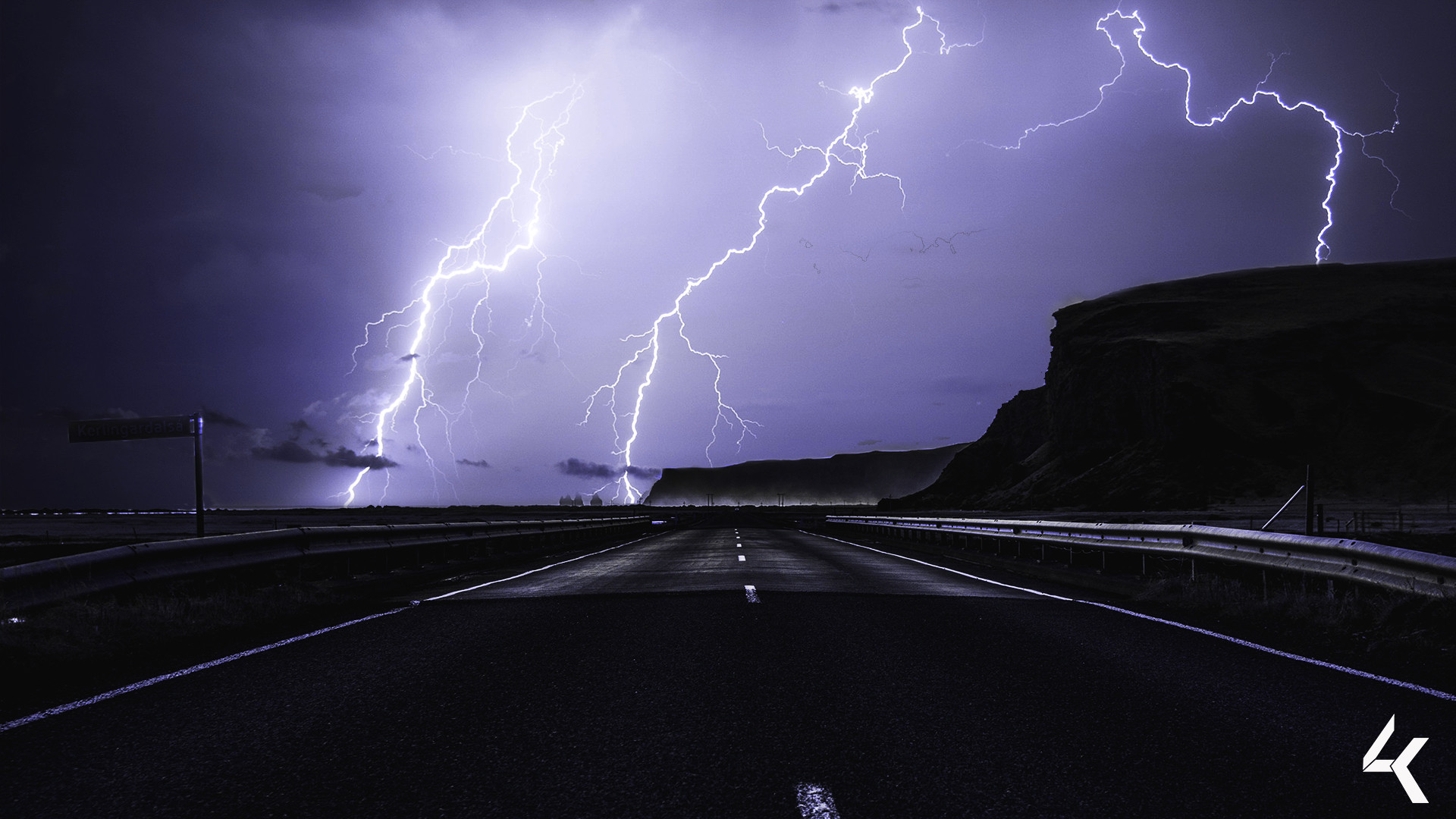
Solaria is reachable by a gloomy highway, lightning bolts dancing perpetually across the eternally dark horizon. The drive is short, roughly thirty minutes, and taking the exit will reveal clear skies and beautiful weather. Geographically, Solaria is a small coastal city. Driving around Solaria takes only a couple of hours. However, its infrastructure suggests it was carved out of a massive metropolis from a corporate utopia: skyscrapers glisten, and the SOLCORP logo is emblazoned on all payment cards, security devices, and its android-like Synths, a stark contrast to the rest of the Diadem.
Solaria runs on an unseen electric grid. Thus, there are no gas stations. It does have a free bikeshare system. Solaria's services are strictly commercial. Research labs, libraries, pharmacies, hospitals, mechanics—you'll need to return to Panorama for that. The robots can't help you. It appears nobody gets sick or injured in Solaria.
The port city boasts a genuine ocean with a real beach. There are even boats. This ocean meets the edge of the Yawning Sea a long distance away...so be careful about sailing too far. You'll know when you glimpse the shimmering rainbow hue in the water.
Solaria is about decadence wrapped in a polished exterior. Don't let the clean streets fool you. Whatever your appetites, you'll find it—as long as you're participating via SOLCORP's sanctioned establishments.

Solaria is reachable by a gloomy highway, lightning bolts dancing perpetually across the eternally dark horizon. The drive is short, roughly thirty minutes, and taking the exit will reveal clear skies and beautiful weather. Geographically, Solaria is a small coastal city. Driving around Solaria takes only a couple of hours. However, its infrastructure suggests it was carved out of a massive metropolis from a corporate utopia: skyscrapers glisten, and the SOLCORP logo is emblazoned on all payment cards, security devices, and its android-like Synths, a stark contrast to the rest of the Diadem.

Solaria runs on an unseen electric grid. Thus, there are no gas stations. It does have a free bikeshare system. Solaria's services are strictly commercial. Research labs, libraries, pharmacies, hospitals, mechanics—you'll need to return to Panorama for that. The robots can't help you. It appears nobody gets sick or injured in Solaria.
The port city boasts a genuine ocean with a real beach. There are even boats. This ocean meets the edge of the Yawning Sea a long distance away...so be careful about sailing too far. You'll know when you glimpse the shimmering rainbow hue in the water.
Solaria is about decadence wrapped in a polished exterior. Don't let the clean streets fool you. Whatever your appetites, you'll find it—as long as you're participating via SOLCORP's sanctioned establishments.
For now, while moving to Solaria is possible, it also requires you to integrate thoroughly with SOLCORP's strict utopian society. This can change in the future. Plot with us for details.
CRED System
Solaria has its own economy. Because the Synths are programmed, they're incapable of adapting to new circumstances. No matter how much you explain, the only money they'll accept is CREDS, or credits. Luckily, they're happy to give anyone who comes through a "replacement" CRED card, seeing as if you were allowed in the city, you must belong here. They promise to transfer your existing balance within 3-5 business days. Of course, there is no balance to transfer so you'll have to start from zero.
Cards are plain and glass-like. Your balance is digitally displayed in the corner of the card. Cards are tap-to-pay. Every shop and service around Solaria will have a handy payment machine. Unlike real money, CREDS cannot be exchanged with each other. You can purchase for someone else, but you can't give them your cold, hard credits.
Cards are plain and glass-like. Your balance is digitally displayed in the corner of the card. Cards are tap-to-pay. Every shop and service around Solaria will have a handy payment machine. Unlike real money, CREDS cannot be exchanged with each other. You can purchase for someone else, but you can't give them your cold, hard credits.
Overall, characters should be able to enjoy a couple of comfortable days in Solaria each visit, with the occasional expensive purchase or indulgence (spa trip, high-end jewelry, etc.) For anything more exorbitant, check in with us!
Earning CREDS
Earning CREDS is simple and won't rely on having a steady job, meaning you can keep your main gig in Panorama while building CREDS on the side. In fact, the Synths won't employ you so you'll have to earn your credits their way.
Trading Artifacts
Anything found in the Fringes that would normally be pawned for chump change can be turned in for credits: chipped mugs, weird coins, rusty nails. Alternatively, purchase junk from flea markets and pawn shops if you prefer not to scavenge. The larger the item, the more they're worth. There are several depots where you can make this trade. Credits will be transferred automatically.
Altruistic Services
Help the Synths or each other. Pick up litter, stop to carry bags, help someone pick a new restaurant to try, or ride a bike instead of driving (which helps save energy!) All altruistic acts will automatically bump up your CRED count. You don't have to mean it; Synths can't see into your heart. But you do have to be helpful. Criminal behavior will reduce your credits instead ("fines").
Features
Solaria is an upper-class beach port. Shops and restaurants carry higher-end goods that are replenished by unknown means. No empty shelves like in Panorama! Earn credits for a fashionable dress, that expensive watch, or a lovely steak dinner. After, you can return to a 5-star resorts or one of the furnished beachside apartments (no stealing furniture). They're not as unaffordable as they look, designed to provide residents with the plush experience they expect. The Twilight District opens after sundown and contains more alluring venues and services.
Despite glimpses of high-tech systems and advanced-looking cars, such as the androids and payment cards, the aesthetic of the city is stuck in the 80s: old TVs and radios, pastels, florals, neon. It's a bit artificial, as if the city has been carefully designed to evoke a certain atmosphere. The palm trees are unusually perfect; the payphones are merely decorative.
The androids that run Solaria are formally known as Synths. There's just enough of them around to maintain the city. They keep the streets clean, serve food, work as cashiers, and, of course, aggressively taser and sedate any troublemakers. If you don't antagonize them, however, they're polite. Their job is to serve you. Synths do not seem to contain any sentient "consciousness" and are not capable of human learning. Their speech and behaviors can be repetitive, suggesting they're simply a highly advanced scripted program.
Solaria has several unique features:
Despite glimpses of high-tech systems and advanced-looking cars, such as the androids and payment cards, the aesthetic of the city is stuck in the 80s: old TVs and radios, pastels, florals, neon. It's a bit artificial, as if the city has been carefully designed to evoke a certain atmosphere. The palm trees are unusually perfect; the payphones are merely decorative.
The androids that run Solaria are formally known as Synths. There's just enough of them around to maintain the city. They keep the streets clean, serve food, work as cashiers, and, of course, aggressively taser and sedate any troublemakers. If you don't antagonize them, however, they're polite. Their job is to serve you. Synths do not seem to contain any sentient "consciousness" and are not capable of human learning. Their speech and behaviors can be repetitive, suggesting they're simply a highly advanced scripted program.
Solaria has several unique features:
Beach & Weather
Solaria's beach has beautiful sand and clear waters. Temperatures are pleasant. The weather is always lovely. You can even swim in the water, something no fluxdrift could do until now. The ocean attached to Solaria is not part of the Yawning Sea. However, if you go too far, you will find yourself touching the forbidden Sea, so be careful. Safe waters are still deep enough to fish, dive, and surf to your heart's content. The marine life itself is equivalent to the tropics with colorful coral. All marine equipment must be rented from SOLCORP.
Zero Tolerance (Crime)
Crime is heavily policed in Solaria. Threats or petty crimes will result in fines while assault or worse will have you thrown out. Upon returning, you'll discover two things: 1) your record and existence have been wiped from the Synths' memories; 2) your CREDs will be reset to zero. Synths are also incapable of recognizing weapons, as if it's not within their programming. As a result, carrying weapons is okay, but using them is not. In other words, it doesn't matter what you have in your hands as long as your behavior isn't aggressive.
Transportation
You can drive your own car or rent one of SOLCORP's sleek models for a joyride. Cars native to Solaria rely on the city's electric grid and will stall at the region's borders. You can't take the car home. Alternatively, you can ride a bike. The bikeshare system is not only free, you'll earn a few CREDS for using it so you may as well take advantage.

Exclusive SOLCORP Branding
The only brand in Solaria is SOLCORP. If you ask for a Coke, it is SOL Cola. Cars are SOL vehicles or subsidiaries under its parent company. You will not find recognizable designer names in stores, though the clothing might be of a similar make and quality. Basically, unlike Panorama's mishmash of logos you sometimes recognize from your home world, Solaria is absent of this quality unless the item was brought in by another fluxdrift.
The Fringes
The In-Between
The Fringes are the in-between areas of roads and highways, filling up the space beyond the anchored regions. Everything in the Fringes is in flux. Permanently shifting diffusion zones make the environment impossible to predict, from time of day to weather to terrain. Even when driving north, you might still run into a desert zone. Surrounding the Fringes is an unconquerable ocean called the Yawning Sea.
Diffusion zones appear as patchwork throughout the Fringes. They do not have clearly defined borders. They can be very large or quite small. Zones come and go; they might return next week, or they might never be seen again. Learn more about diffusion zones and cosmic storms.
Diffusion zones appear as patchwork throughout the Fringes. They do not have clearly defined borders. They can be very large or quite small. Zones come and go; they might return next week, or they might never be seen again. Learn more about diffusion zones and cosmic storms.
The Yawning Sea
Seemingly an ocean like any other, though with a mysterious rainbow-like hue, the Yawning Sea surrounds the piece of land fluxdrift individuals find themselves on. Sometimes, pieces of driftwood or abandoned boats wash ashore. Sometimes, there's evidence of a plane crash—an engine or a broken propeller.
All attempts to traverse the ocean have failed. People don't always die. It's more like they disappear or they come back...not themselves. Some are found wandering the roads in a fugue state. Others return calmly in their car, go about their lives, and never speak of their experience again. Others still don't remember ever trying to cross in the first place. Some have a perfectly logical explanation, but their friends and loved ones insist the person who returned is not the same person who left. They can't prove it, but it's true.
Whatever it is, the Yawning Sea takes something you can't get back. Best not to go there.
All attempts to traverse the ocean have failed. People don't always die. It's more like they disappear or they come back...not themselves. Some are found wandering the roads in a fugue state. Others return calmly in their car, go about their lives, and never speak of their experience again. Others still don't remember ever trying to cross in the first place. Some have a perfectly logical explanation, but their friends and loved ones insist the person who returned is not the same person who left. They can't prove it, but it's true.
Whatever it is, the Yawning Sea takes something you can't get back. Best not to go there.
Characters can try to swim or drive into the ocean, but they won't emerge the same. If they attempt early on in the game, they'll wake up somewhere else in their car, dazed and with no memory of what happened. If a character's been in the game a while and you want a unique effect for them, ask, and we'll see what we can do.
The Stygian Sky
Like the ocean, the sky seems to possess a mysterious force. Constellations are inconsistent, weather is unpredictable outside of the anchored regions, and most importantly, all attempts at true flight fail. Even birds don't follow their usual migratory patterns, staying put throughout the winter.
For this reason, only ground travel is possible in the Diadem. Hovercrafts and low-flying drones are occasionally spotted, but planes are nonexistent. Anyone or anything that goes up too high into the air either never comes down or returns with gaps in their memories. Not many will agree to talk about their experiences. It's almost as if they can't.
For this reason, only ground travel is possible in the Diadem. Hovercrafts and low-flying drones are occasionally spotted, but planes are nonexistent. Anyone or anything that goes up too high into the air either never comes down or returns with gaps in their memories. Not many will agree to talk about their experiences. It's almost as if they can't.
Characters with flight capabilities can try it, but they won't reach their destination. If they attempt early on in the game, they'll be found unconscious somewhere. Alternatively, their ability will simply backfire, causing them to fall. If a character's been in the game a while and you want a unique effect for them, ask, and we'll see what we can do.
Towns
Towns have a smaller population than Panorama, but play an important role in the economy, although some of Acreage's economic power has eroded due to the recent arrival of Solaria and a terrible disaster that destroyed two-thirds of the territory. Kolliery remains as vital as ever, however, due to its processing of raw materials.
Acreage
Population: under 5,000
Climate: Mediterranean-like
Sheriff: Maeve Sov
Time Zone: -1:00 behind Panorama
Climate: Mediterranean-like
Sheriff: Maeve Sov
Time Zone: -1:00 behind Panorama
Acreage was once a large swathe of land for farming, fishing, and livestock. Since July 126, it's suffered from a corrosive fluid leaking from its groundwater, infecting the crops, the lake, and the town's very taps.
While some of the town's stauncher residents have proclaimed they will not be moving, others have already started packing their trucks to start a new life in Panorama or, perhaps, even Kolliery. Maeve Sov, the Sheriff, has stayed despite Acreage's struggles, as have the owners of The Easy Shop, the town's general store, and Rusty's Pub, whose specialty is fish and chips.
The town square is fortunately furthest from the corrosion and thus, the shops, inns, and other popular attractions for tourists like its garden centers and horse riding trails remain active. Still, the town is suffering from the impact of the Cube's descent. Without the lake, its fishing industry has been utterly destroyed, and the arrival of the new region, Solaria, has resulted in residents being able to source their seafood from the ocean's waters instead.
The townsfolk put on a good front for tourists, but some are bitter at having to rely on outsiders to sustain the town when they were once proud of their self-sufficiency. Depending on whom you talk to, longtime residents can be particularly surly and hostile. As far as they're concerned, the town's just fine. They don't need new blood mucking up the works some more.

While some of the town's stauncher residents have proclaimed they will not be moving, others have already started packing their trucks to start a new life in Panorama or, perhaps, even Kolliery. Maeve Sov, the Sheriff, has stayed despite Acreage's struggles, as have the owners of The Easy Shop, the town's general store, and Rusty's Pub, whose specialty is fish and chips.
The town square is fortunately furthest from the corrosion and thus, the shops, inns, and other popular attractions for tourists like its garden centers and horse riding trails remain active. Still, the town is suffering from the impact of the Cube's descent. Without the lake, its fishing industry has been utterly destroyed, and the arrival of the new region, Solaria, has resulted in residents being able to source their seafood from the ocean's waters instead.
The townsfolk put on a good front for tourists, but some are bitter at having to rely on outsiders to sustain the town when they were once proud of their self-sufficiency. Depending on whom you talk to, longtime residents can be particularly surly and hostile. As far as they're concerned, the town's just fine. They don't need new blood mucking up the works some more.
Engagement Paths
Currently, characters can assist the town with containment, loading, and guarding fresh water supplies on the Rail, and researching how to reverse the damage. Plot with us to start a project or ask if you have any questions!
Currently, characters can assist the town with containment, loading, and guarding fresh water supplies on the Rail, and researching how to reverse the damage. Plot with us to start a project or ask if you have any questions!
Kolliery
Population: under 20,000
Climate: Cold long winters; short summers
Foreman: Gaiaelus
Time Zone: +1:00 ahead of Panorama
Climate: Cold long winters; short summers
Foreman: Gaiaelus
Time Zone: +1:00 ahead of Panorama
Kolliery contains two of the biggest industries that keep the Diadem going: mining and oil. There are also manufacturing plants for essential goods to help sustain the population, which can't subsist solely from looting and scavenging.
Operated by a combination of helper robots, machinery, and manpower, this is a cold, lonely, and dangerous place to live. At the height of winter, the polar night lasts the entire month of January, while an uninterrupted midnight sun spans the month of June. As you drive towards Kolliery from Panorama, you can physically see the curtain of darkness (or light, depending on the season) descend around your car. It shouldn't be possible, but somehow it is.
Not everybody lasts out here despite the decent pay by Diadem standards. The majority of the workers are single, unattached men. A rare few thrive in this environment and have made it their home. Some have even moved their families here or started one, but the presence of children remains extremely rare. The Foreman keeps order with the help of his crew, but this desolate town © largely governs itself. People go to Kolliery for a fresh start. Nobody wants to ask too many questions, and most stick to their business.
Beyond the town's industries and oil rigs, important locations include: The Dusk Rose (a bed and breakfast), a diner fashioned after an old tavern called Clover Hart, a saloon named Blue Texas (the owner insists his granddad came from the distant land of Dallas), and a general store (sells booze, ammo, and other goodies) simply labeled The General Store. Kolliery gets its share of visiting fluxdrifts who pass through and need a place to rest. They're usually friendly to travelers as long as it doesn't look like anybody will cause trouble. For a small fee, you can stay a couple of days at the Dusk Rose, which is run by an elderly couple, before moving on.
The importance of their work and the town's insular nature mean locals are highly suspicious of new fluxdrifts who want to join them. Of course, the high turnover rate also means they're always recruiting new workers. It's a balancing act for the Foreman who runs the town.
Operated by a combination of helper robots, machinery, and manpower, this is a cold, lonely, and dangerous place to live. At the height of winter, the polar night lasts the entire month of January, while an uninterrupted midnight sun spans the month of June. As you drive towards Kolliery from Panorama, you can physically see the curtain of darkness (or light, depending on the season) descend around your car. It shouldn't be possible, but somehow it is.
Not everybody lasts out here despite the decent pay by Diadem standards. The majority of the workers are single, unattached men. A rare few thrive in this environment and have made it their home. Some have even moved their families here or started one, but the presence of children remains extremely rare. The Foreman keeps order with the help of his crew, but this desolate town © largely governs itself. People go to Kolliery for a fresh start. Nobody wants to ask too many questions, and most stick to their business.

Beyond the town's industries and oil rigs, important locations include: The Dusk Rose (a bed and breakfast), a diner fashioned after an old tavern called Clover Hart, a saloon named Blue Texas (the owner insists his granddad came from the distant land of Dallas), and a general store (sells booze, ammo, and other goodies) simply labeled The General Store. Kolliery gets its share of visiting fluxdrifts who pass through and need a place to rest. They're usually friendly to travelers as long as it doesn't look like anybody will cause trouble. For a small fee, you can stay a couple of days at the Dusk Rose, which is run by an elderly couple, before moving on.
The importance of their work and the town's insular nature mean locals are highly suspicious of new fluxdrifts who want to join them. Of course, the high turnover rate also means they're always recruiting new workers. It's a balancing act for the Foreman who runs the town.
Engagement Paths
Currently, characters can work a contract in the mines to harvest the specialized chromatic ore. To begin an extended project related to the ore or the mining industry, plot with us!
Currently, characters can work a contract in the mines to harvest the specialized chromatic ore. To begin an extended project related to the ore or the mining industry, plot with us!
Main Navigation ::: ⇅
Top